ServicesHardscape Installation
Hardscape Installation in Windermere
We build paver patios, walkways, driveways and retaining walls that stay level. Before we lay a single paver, we check your soil, slope and drainage so the base fits the ground it sits on. You get a finished surface that sheds water and doesn't settle into dips.
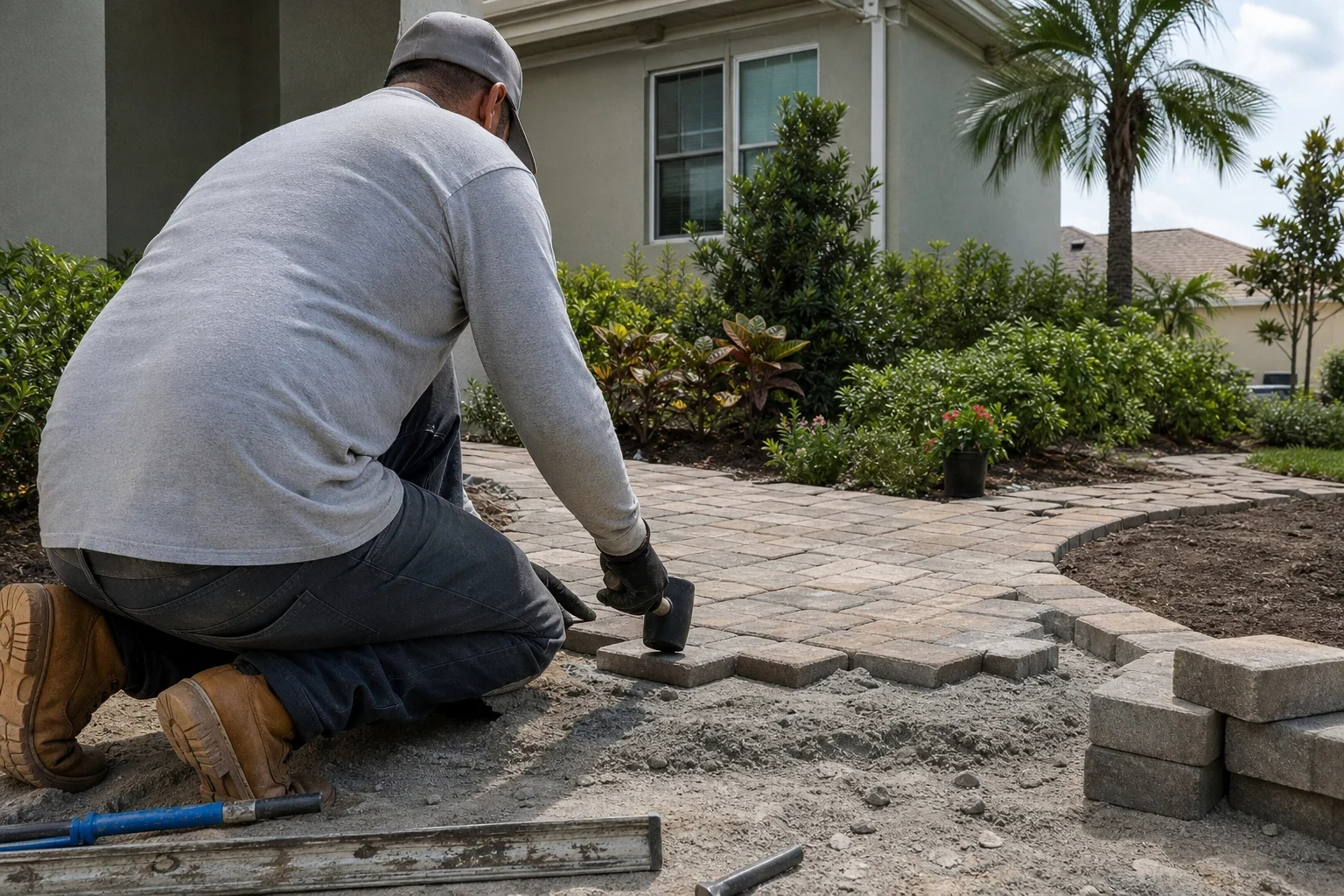
Good hardscape starts below the surface
Most paver problems we get called about aren't really paver problems. A patio sinks because the base was too thin. Water pools because nobody set a slope. Edges spread because there was no restraint holding them in. The stones on top usually look fine. What failed is underneath.
So that's where we start. On a new project, we look at how water moves across your yard, where downspouts drain and sprinklers spray, and which tree roots are close by. On a patio or walkway that's already failing, we lift a few pavers and look at the base before we recommend anything. Sometimes a reset fixes it. Sometimes the base has to come out. We tell you which, and we show you why.
A new patio also changes how the rest of your yard behaves. We plan around your beds and lawn, and if sprinkler heads will end up soaking the new surface, our irrigation work can move them while we're there.
What our hardscape installation covers
Paver patios and pool decks
Concrete or travertine pavers over a compacted base, sloped away from your home and locked with polymeric sand. We size the space around how you'll use it, from a small grill area to a full outdoor seating spot.
Walkways and garden paths
Paths from the driveway to the front door, around the side of the house or out to the back gate. We set them slightly above the surrounding grade so rain runs off instead of collecting.
Paver driveways
Vehicles need a deeper, heavier base than foot traffic. We excavate and compact to match the load so the driveway doesn't rut where tires sit.
Retaining and seating walls
Segmental block walls with drainage gravel and pipe behind them, so water can escape instead of pushing the wall forward over time.
Fire pit areas and borders
Fire pit pads, bed edging and paver borders that give your lawn and planting beds a clean, lasting edge.
Repair and reset
For existing pavers that have sunk or shifted, we lift the affected area, correct the base and relay the same stones when they're still in good shape.
Signs your yard is ready for hardscape work
Pavers that rock or sink
A paver that moves underfoot or a low spot that holds water means the base has washed out or was never compacted well.
Water collecting near your home
If heavy summer storms leave puddles against the foundation or on the patio, the slope needs correcting before anything else.
Weeds and ants in the joints
Lost joint sand lets weeds root and ants tunnel, which loosens pavers further.
A worn dirt path in the lawn
When everyone cuts the same line across the grass, a walkway usually works better than reseeding or new sod.
A wall that leans or bulges
Usually a sign of trapped water behind it. Catching it early often means a repair rather than a rebuild.
Roots lifting a walkway
We look at where the roots run and plan a route or base that works with the tree instead of fighting it every year.
How a hardscape project runs
- 1
Walkthrough and free estimate
We meet you on site, measure the area and check slope, soil and drainage. You get a written, line-item estimate that explains what the base and materials need and why.
- 2
Layout, locates and approvals
We paint the layout so you can see the shape on the ground and call in underground utility locates before digging. If your neighborhood has an HOA, we give you the drawing and material details for the application.
- 3
Excavation and base
We dig to the right depth for the use, lay crushed stone in layers and compact each one. The slope gets set here, because sand on top can't fix a bad base.
- 4
Laying, cutting and locking
Pavers go down in your chosen pattern, edges are cut clean and restraints are fastened. We sweep in polymeric sand and compact the whole surface so it locks together.
- 5
Cleanup and handoff
We haul away excess soil and debris, blow off the surface and walk it with you. You'll know how long to wait before using it and how to care for it.
What moves the price of a hardscape project
Every project gets its own written estimate after we've seen the site, because two patios of the same size can cost very different amounts. The biggest swings come from what's under the ground and how easy it is to reach. If paying all at once doesn't suit you, financing is available for projects up to $100,000, with terms anywhere from two to twelve years and no penalty if you pay it off early.
- Size and shape
- More square footage means more base and pavers. Curves, steps and multiple levels add cutting and labor.
- Paver and stone choice
- Standard concrete pavers, larger-format pavers and travertine all differ in material cost and in how long they take to set.
- Base and drainage needs
- Soft or low ground may need a deeper base, drain pipe or a wall to hold grade. We explain any of this in the estimate before work starts.
- Access to the work area
- A wide side yard lets equipment in. A tight gate or a fenced backyard means more hand work and hauling.
- Removing what's there
- Breaking out old concrete or lifting failed pavers adds demolition and disposal to the job.
Hardscape questions we hear often
Something not covered here? (407) 759-3842
How long does a paver patio take to install?
Most patios and walkways take a few days on site once materials are delivered. Driveways, walls and multi-level projects take longer. Heavy rain can push a day here and there. We give you an expected timeline with your estimate.
Should I choose pavers or poured concrete?
Concrete slabs tend to crack as the ground shifts, and those cracks are hard to repair cleanly. Pavers flex with small movement, and if an area settles we can lift and reset it. For most patios and walkways around your home, we recommend pavers, but we'll talk through both honestly.
Can you fix my sinking pavers instead of replacing everything?
Often, yes. We lift a section to see whether the problem is washed-out sand, a thin base or roots. If the base is sound in most places, we repair the low areas and reuse your pavers. If the base failed everywhere, we'll tell you and show you what we found.
Do I need a permit or HOA approval?
It depends on the project and where you live. Many patios don't need a building permit, while some walls, driveway changes and work near a pool can. HOA approval is common, so we check what applies before we start and hand you the drawings and material details your HOA will ask to see. If you're unsure, bring it up when you call for your estimate and we'll talk it through.
Will the project tear up my lawn?
We keep equipment on one path and lay down protection where we can. Some grass along the edges usually gets disturbed. We regrade those spots, and if you'd like fresh grass there, our sod installation crew can patch it.
How do I keep new pavers looking good?
Sweep them regularly, keep sprinklers aimed away from the surface and top up joint sand if you see gaps. Wait the time we give you before driving or setting heavy planters on a new area.
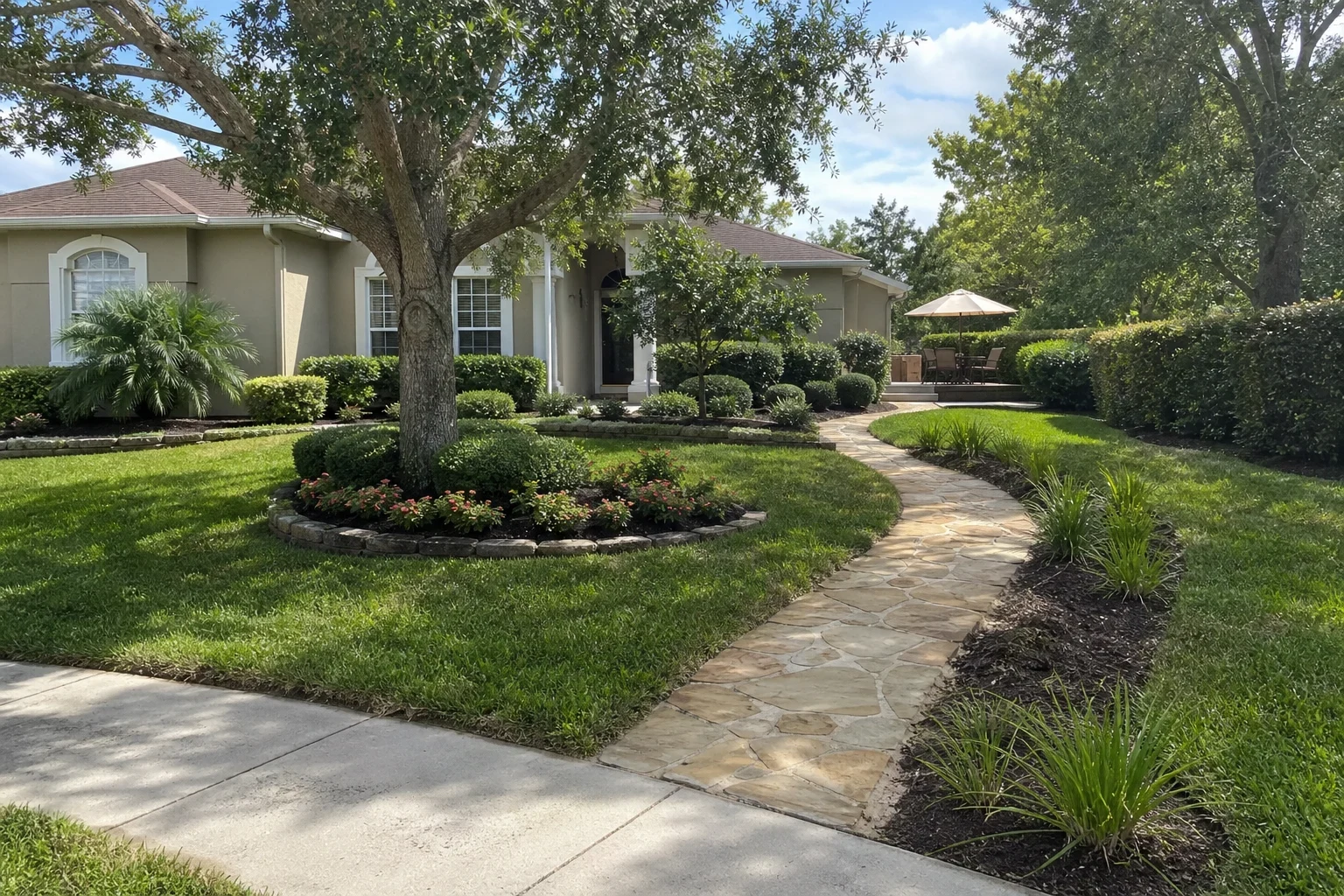
Let's look at your yard together
We'll walk the area with you, check the ground and drainage, and give you a written estimate that spells out what the project needs. The visit costs you nothing.