ServicesLandscape Design
Landscape Design in Windermere
A good design starts with what your yard is already telling you. We look at where water sits, where the sun hits hardest and why past plantings struggled, then build a plan for your home that grows in well and stays easy to keep up.
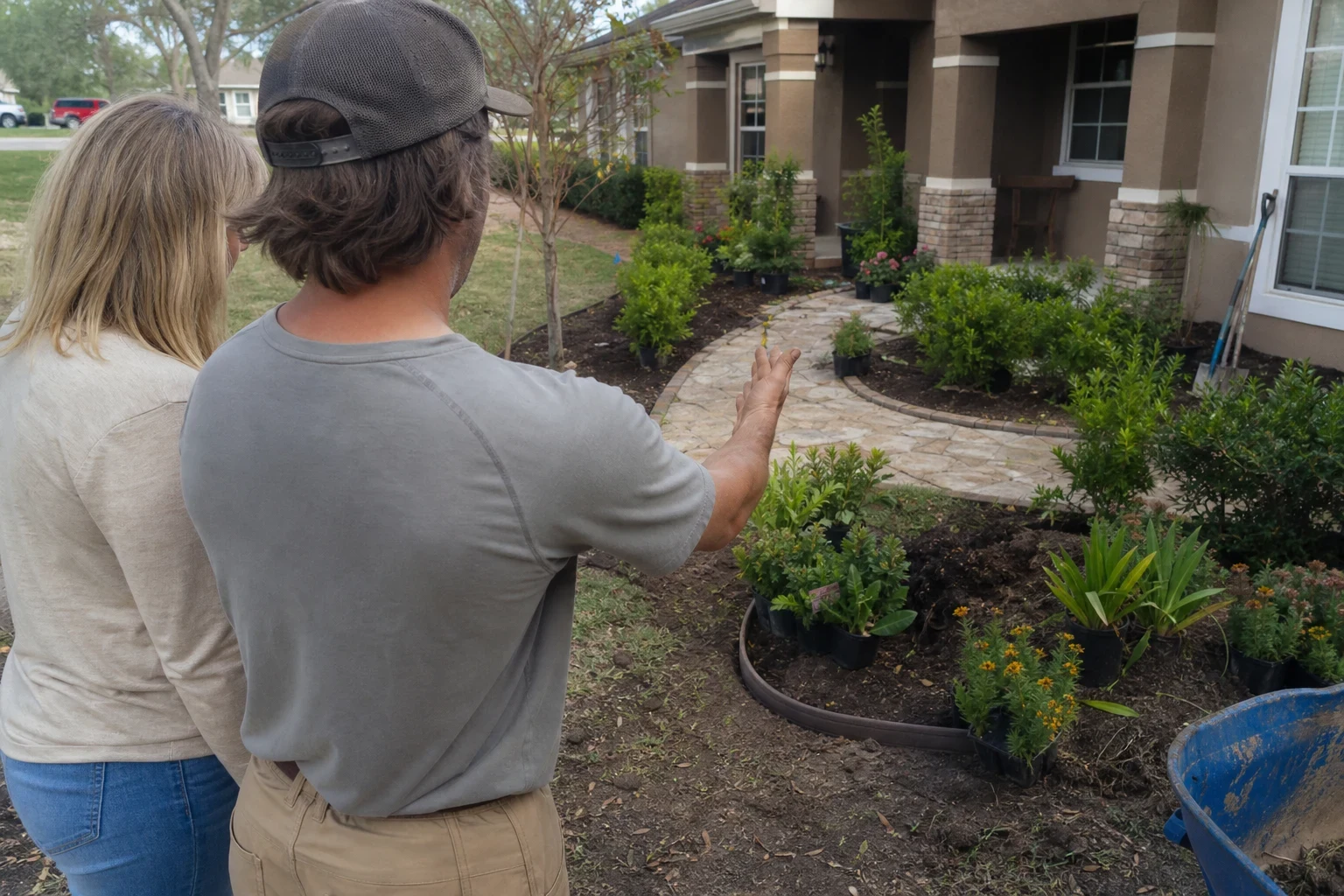
A plan that fixes the problem, not just the look
Most yards that need a redesign have a reason. Shrubs die along one wall, grass thins under an oak, a corner floods every afternoon storm. If a new design ignores that reason, the same thing happens to the new plants within a season or two.
So we start by figuring out the cause. We check the soil, track the sun across the property, note how water moves and talk with you about how you use the space. In sandy Central Florida soil that drains fast in one spot and holds water in another, that groundwork is what keeps a new bed alive through its first summer.
From there we draw a layout that suits your home and your budget: plant choices, bed shapes, lawn areas, paths and patios. You can have us install all of it or tackle it in phases.
What our landscape design includes
Site assessment
We walk the property with you and look at sun exposure, soil type, slope and drainage. We also note existing trees, utilities and anything worth keeping.
Cause-first notes on problem areas
If plants have failed before, we tell you why we think they did. Too much shade, wet roots, poor soil or the wrong plant for the spot each call for a different fix.
Planting plan
We pick plants that match each zone of your yard, with attention to mature size so nothing outgrows its spot or crowds a window in a few years. We lean toward Florida-friendly choices that handle heat and summer rain.
Layout for beds, lawn and hardscape
The plan shows where beds, turf, walkways and patio areas go and how they connect. It accounts for foot traffic, mowing access and where you actually want to sit outside.
Water and drainage planning
We mark where irrigation zones should run and where grading or plant choice can handle runoff. That keeps thirsty plants and drought-tolerant ones from sharing the same zone.
A clear install path
Once the design is set, we explain the order of work and what each phase involves, so you can decide what to do now and what can wait.
Signs it is time for a new design
- Plants keep dying in the same spot
- Replacing them again rarely works. A repeat loss usually points to light, water or soil, and the design has to solve that first.
- Shrubs have swallowed the house
- Foundation plantings that were small years ago now block windows and rub the siding. A redesign sets plants at the right distance for their full size.
- Water pools or washes out mulch
- Standing water after storms or mulch scattered across the walk means water is moving where it should not. Layout and grading changes can redirect it.
- The yard no longer suits your routine
- Perhaps you would like a grilling area, open play space for the kids or less grass to mow each week. A new plan can reshape the yard around those habits.
- You just moved in
- New owners often inherit a tired or mismatched yard. A fresh plan gives you a clear starting point instead of piecemeal fixes.
How a design project runs
- 1
Phone call and walkthrough
You call, tell us what bothers you about the yard and we set a time for an on-site walkthrough. We listen first, then start looking.
- 2
Diagnosis on site
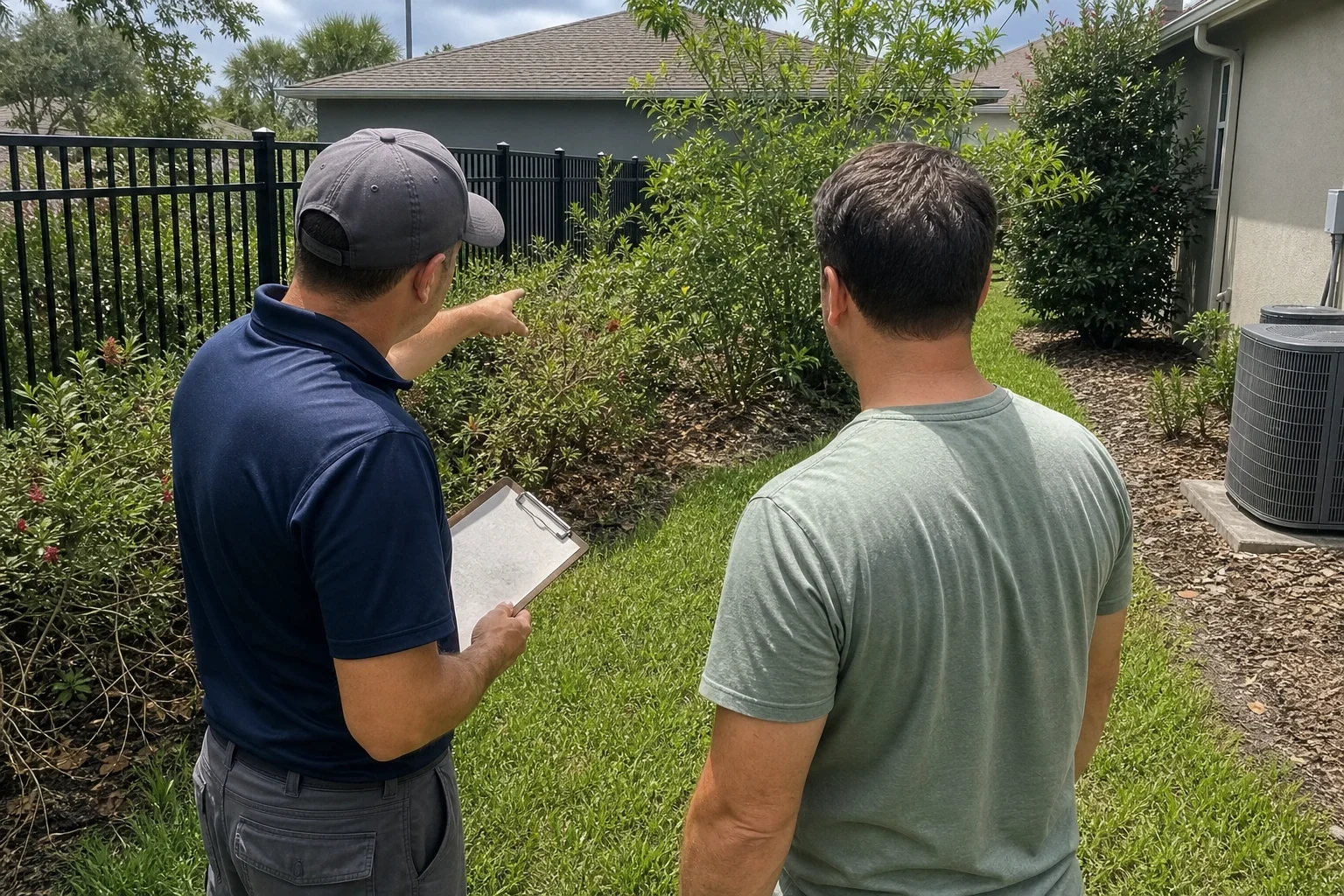
We check soil, sun, drainage and the condition of existing plants and trees. We show you what we find and explain what is behind any trouble spots.
- 3
Design and review
We draw up the plan and go over it with you. You can ask for changes to plants, layout or phasing until it feels right.
- 4
Installation
When you are ready, our crew handles the work, which can include sod installation, new beds, irrigation and hardscape installation. We protect the areas we are not working on and clean up at the end of each day.
- 5
Walk the finished yard
We go over the result with you and explain watering and care for the new plants during their first few months.
What affects the cost of landscape design
Every yard starts from a different place, so we price each project after we see it. Your free estimate breaks down what is included so you know what you are paying for. If you would rather finish everything in one go, financing is available for amounts up to $100,000, with terms anywhere from 2 to 12 years and no penalty for paying it off early.
- Size of the area
- A front entry bed is a smaller project than a full front and back yard. More square footage means more planning, plants and labor.
- Existing conditions
- Removing old shrubs, grinding stumps or fixing drainage adds steps before anything new goes in. We point these out during the walkthrough.
- Plant size and selection
- Larger container plants look established sooner but cost more than smaller starts. We can show you both options side by side.
- Hardscape and irrigation
- Adding a patio, pavers, edging or new irrigation zones raises the scope. Many homeowners phase these in over time.
- Access to the yard
- Narrow side yards or fenced backyards can slow material delivery and change how we move soil and plants in.
Landscape design questions
- Do you install the design too, or just draw it?
- We do both. Most homeowners have us handle the installation, since we already know the site and the reasoning behind each choice. If you prefer to do part of it yourself, we can tell you which pieces are easiest to take on.
- Can I do the project in phases?
- Yes. We often plan the whole yard at once and then install it in stages. Drainage and irrigation usually come first, since plants and sod depend on them.
- What kind of plants do you use?
- We choose plants that suit each spot in your yard, which in our area often means Florida-friendly shrubs, groundcovers and trees that handle heat, heavy summer rain and sandy soil. We also consider how much upkeep you want, since some plants need regular trimming and others mostly take care of themselves.
- My HOA has to approve changes. Can you help?
- Yes. We put together a clear plan showing plant choices and layout that you can hand to your board for their review. If your community has rules on plant types or lawn coverage, mention them on our first call and we will design within them.
- Why do you spend so much time looking before designing?
- Because a plan built on guesses tends to fail in the same places the old one did. Finding out why a bed struggled, or where water collects, lets us get the design right the first time. That saves you from paying to replace plants a second time.
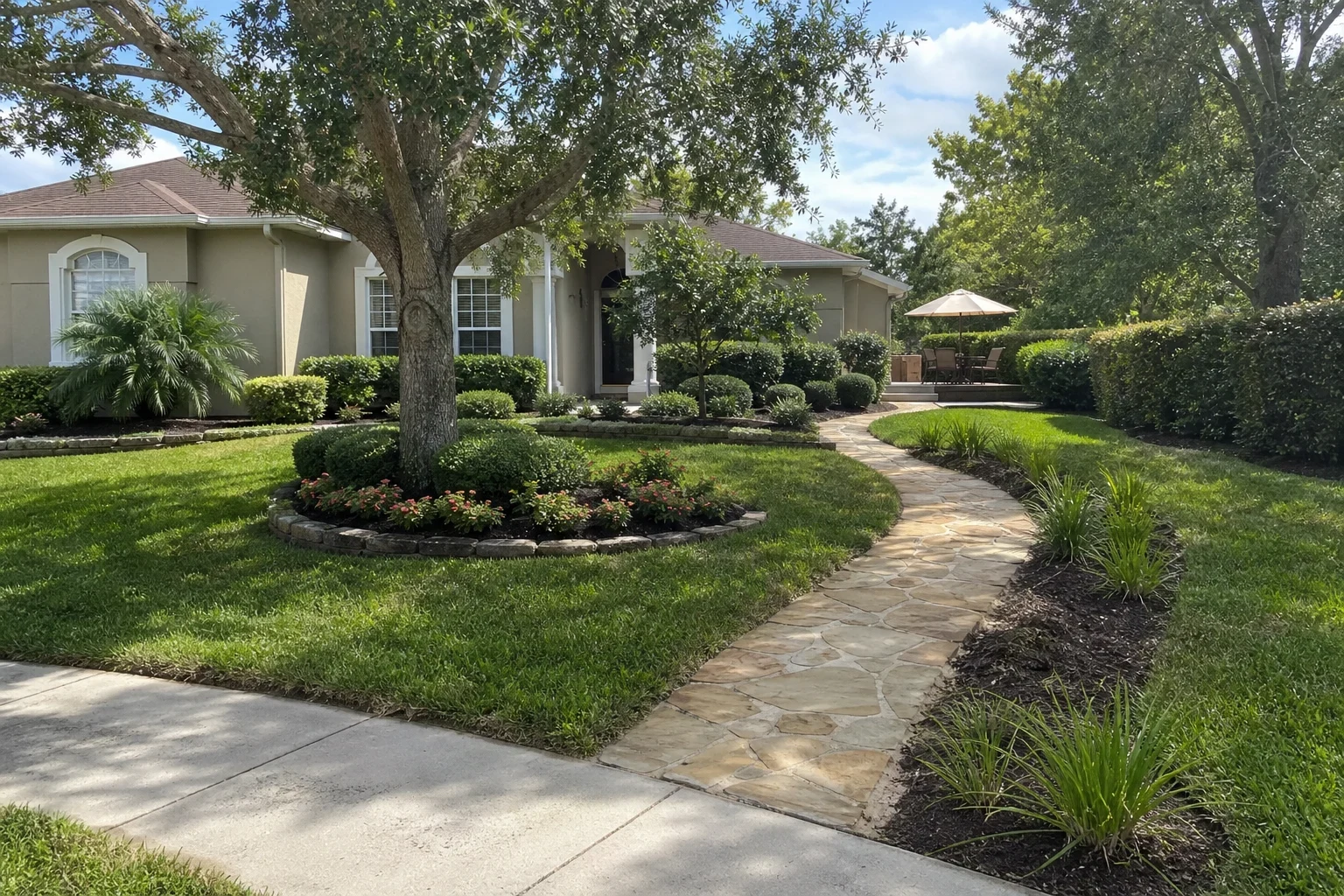
Let us take a look at your yard
Tell us what is not working and we will come out to see why. You will get a free estimate and an honest plan for what your home's landscape needs.