ServicesStump Grinding
Stump Grinding in Windermere
An old stump trips mowers, sends up sprouts and can draw termites toward your home. We look at what is under and around it first, then grind it out to the right depth for what you want to put there next.
Getting rid of the stump, and the reason it's still a problem
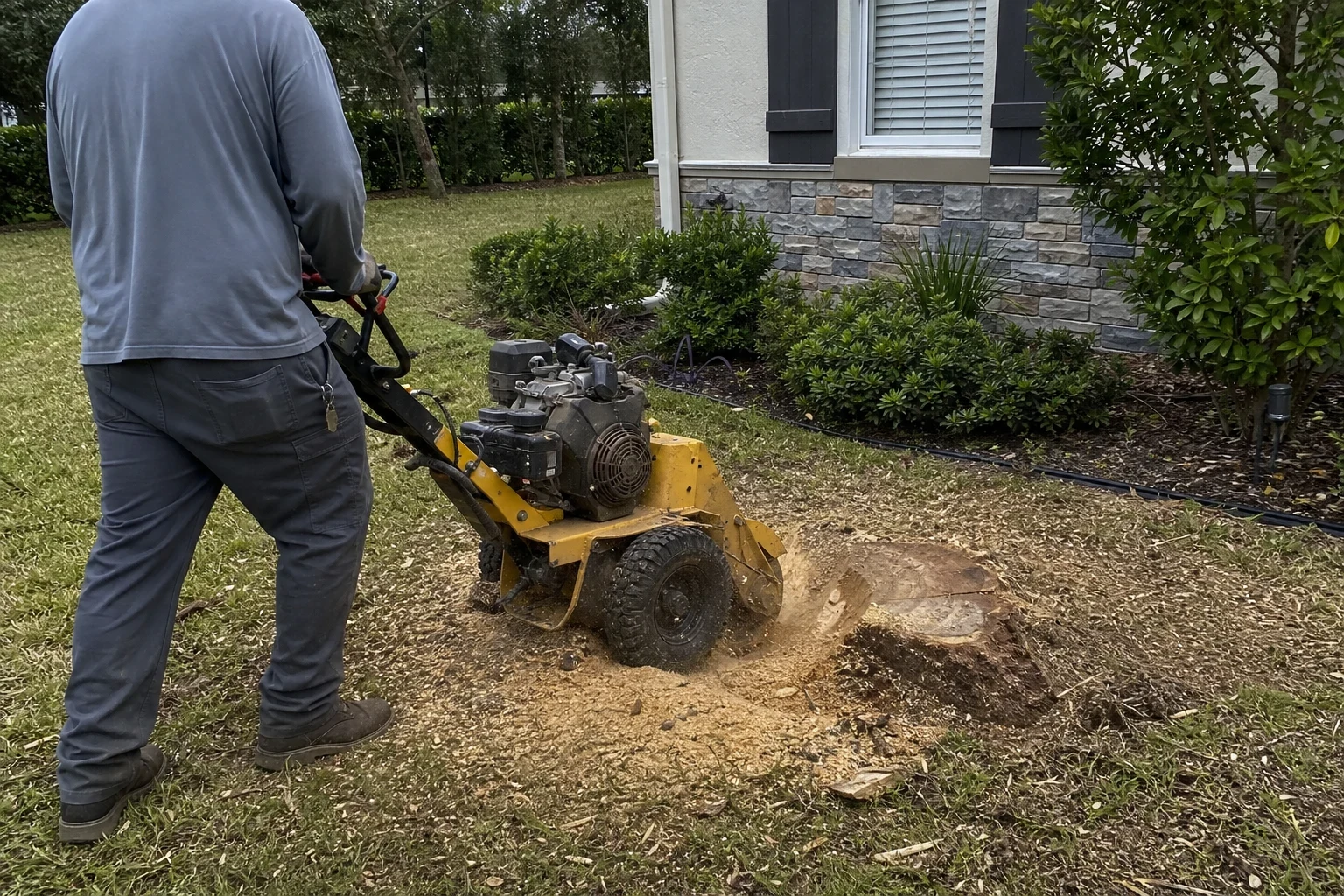
Stump grinding uses a cutting wheel to chew the stump down into wood chips, well below the soil line. There's no digging out a huge root ball and no crater left in the yard. It is usually the right call once a tree is already down and you want the space back for lawn, a bed or a walkway.
Before we grind, we look at why the stump is causing trouble. Sprouts coming up around it mean the roots are still alive. Mushrooms or soft, crumbling wood mean rot. Small mud tubes on the bark can point to termites. Each of those changes how deep we go, how far we chase the surface roots and what we recommend afterward, so you are not calling someone back in six months.
What stump grinding with us covers
A look at the stump and its roots
We check the wood, the surface roots and anything growing back from them. If the tree was a laurel oak or camphor, both known for suckering, we plan for the root flare and not just the trunk.
Line check before the wheel turns
We arrange a utility locate through Sunshine 811 and look for irrigation lines and heads near the stump. Sprinkler pipe often runs right past old trees, and we would rather find it than cut it.
Grinding to the depth you need
Most stumps get ground several inches below grade. If you plan to lay sod or plant there, we go deeper so roots and turf have clean soil to work with.
Surface roots that reach into the lawn
Exposed roots that bump the mower or lift the edge of a bed can be ground along their run, not just at the stump.
Chips handled your way
We can backfill the hole with the grindings, haul them off and top the spot with soil, or leave a pile for you to use as mulch in back beds.
Cleanup before we leave
Chips get raked out of the grass and blown off driveways and walks. You see a level patch, not a mess.
Signs the stump should come out
- Shoots keep coming back
- Green sprouts around the base mean the root system is still alive and feeding them. Cutting them only makes them push harder.
- Mushrooms or soft wood
- Fungus and spongy wood mean the stump is rotting. Rot draws insects and can spread decay to roots of nearby plants.
- Termite signs near the house
- Rotting wood in sandy Florida soil is an easy meal for subterranean termites. A stump close to your foundation is worth removing before it becomes a feeding site.
- Mowing around it every week
- If you are trimming by hand or have nicked a blade on it, the stump is costing you time each visit.
- You have plans for the spot
- A new bed, patio or fresh sod can't go in cleanly over a stump. Grinding is the first step.
How the job day goes
- 1
A walkthrough and your estimate
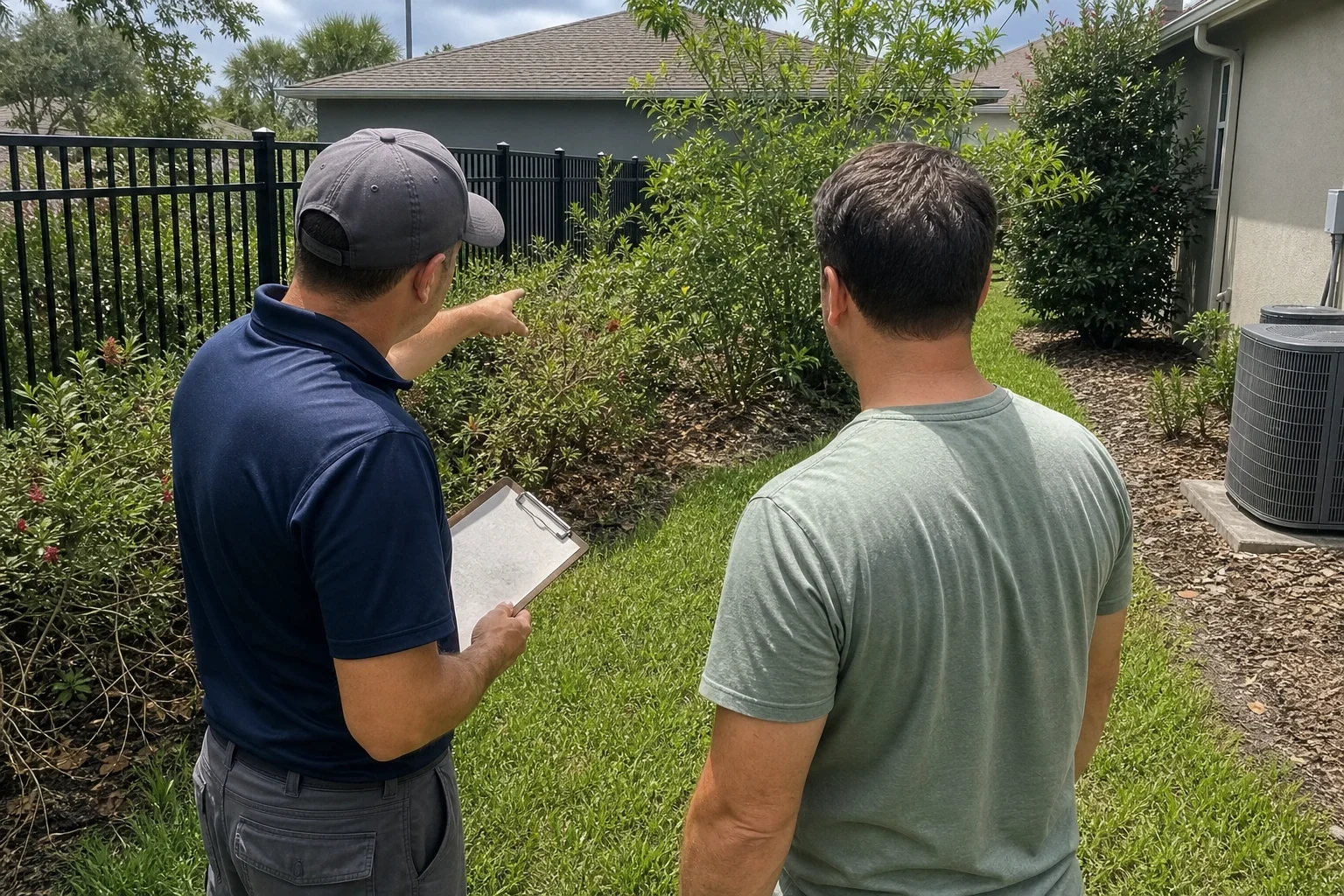
We come out, look at the stump, the roots and access to it, and ask what you want there afterward. You get a clear estimate that spells out the work.
- 2
Locates and prep
Utility lines are marked and we flag any sprinkler heads or pipe nearby. We set up guards so chips stay away from windows, cars and screens.
- 3
Grinding
Our grinder works back and forth across the stump until it is below grade, then follows the larger surface roots. A typical yard stump takes well under an hour of grinding.
- 4
Fill, level and clean up
We backfill or haul the chips, level the spot and clean the lawn and hard surfaces. We'll tell you if settling is likely so you know when to top it off.
What sets the price of stump grinding
Stump grinding is priced by the stump, not by a flat fee that hides extras. We measure it on site and give you the figure before any work starts. Several stumps on one visit usually cost less each than separate trips.
- Diameter
- We measure across the widest point at ground level. A broad oak flare takes far longer than a slim pine.
- Wood type and condition
- Dense hardwood grinds slower than soft or rotted wood. Palm stumps are fibrous and behave differently from hardwood.
- Access to the stump
- A stump behind a fence, on a slope or between beds may need a smaller machine and more time.
- Roots and depth
- Going deeper for sod or planting, or chasing long surface roots, adds time.
- What happens to the chips
- Leaving grindings in place costs the least. Hauling them away and bringing in soil adds material and labor.
Stump grinding questions we hear
- Will the roots keep growing after you grind?
- Most trees stop once the stump is ground well below grade, because the roots lose their supply. A few species, like laurel oak and camphor, can sucker from roots further out. If we see that pattern we tell you up front and grind the roots that matter.
- Can you grind a stump near my sprinklers or fence?
- Usually yes. We locate the irrigation lines first and use guards and careful passes near fences and walls. If a line sits right in the root zone, we'll show you before we start and talk through the options.
- Can I lay sod right over the ground stump?
- Not directly over fresh chips. Wood chips pull nitrogen as they break down and settle over time. We clear most of the grindings, add soil and let you know when the spot is ready for sod installation.
- Do you also take the tree down?
- Yes. If the tree is still standing, our tree trimming and removal crew can take it down and we grind the stump in the same project. For palms, see our palm tree pruning and removal service.
- How much mess will there be?
- The grinder throws chips a short way, so we set guards and rake everything up afterward. Driveways and walks get blown clean. Most people are surprised how small the finished patch looks.
Ready to get that stump out of the way
Tell us where the stump is and what you'd like there next. We'll come take a look, check what's under it and give you a free estimate.